LED Video Walls vs. Projection: Which Fits Your Corporate Event?
Choose an LED video wall when a bright, flexible stage display fits your content and room. Choose projection when the lighting, screen placement and viewing conditions support it. For a corporate event in Orlando, the right choice depends on what your audience must see, how the room will operate and the complete production cost.
A leadership presentation, an employee awards ceremony and a product reveal ask different things of a screen. Start with those differences before approving the display line in your AV proposal.
Start with the message and the room
At the Bishop Moore Catholic Legacy Gala at Rosen Shingle Creek, New Sense used a custom LED wall as the program's visual anchor. Original video content connected the screen to the event's identity, while lighting and draping extended the design into the ballroom.
That example gives a corporate buyer a useful starting point: identify what belongs on the screen and how it relates to the program. A presentation needs readable detail; a gala's featured video needs a clear visual focus. Share the actual room layout and representative content before choosing equipment.
When an LED video wall is a strong fit
LED video walls emit light directly. A suitably specified wall can be a useful choice when room lighting needs to remain up or when a wide, custom-shaped stage canvas is central to the design. It also avoids a projection beam crossing the room.
The tradeoff is that physical size does not tell you how much detail the wall can display. Its panel configuration and pixel pitch determine its pixel grid. A wall that looks effective behind a speaker may still be a poor fit for a dense spreadsheet.
Planar's pixel-pitch guidance connects pixel spacing with viewing distance. Ask the production team to show how its proposed wall suits your closest viewers and your content. If cameras will capture the stage, include an on-camera test rather than approving the display from an audience photograph alone.
When projection deserves a closer look
Conventional projection remains a practical option for presentation screens when the room's light and layout can be controlled. A clear rectangular image may be exactly what a keynote or panel needs.
The projector, lens and surface work as a system. Ambient light, image size and the distance between lens and screen all affect the design, as Christie's projector-selection guidance explains.
For your Orlando ballroom or conference room, ask to evaluate the image under the lighting planned for the session. Include stage lighting and any daylight entering the room. Confirm that presenters and guests will not interrupt the beam. Rear projection may solve a particular sightline problem, but it needs space behind the screen.
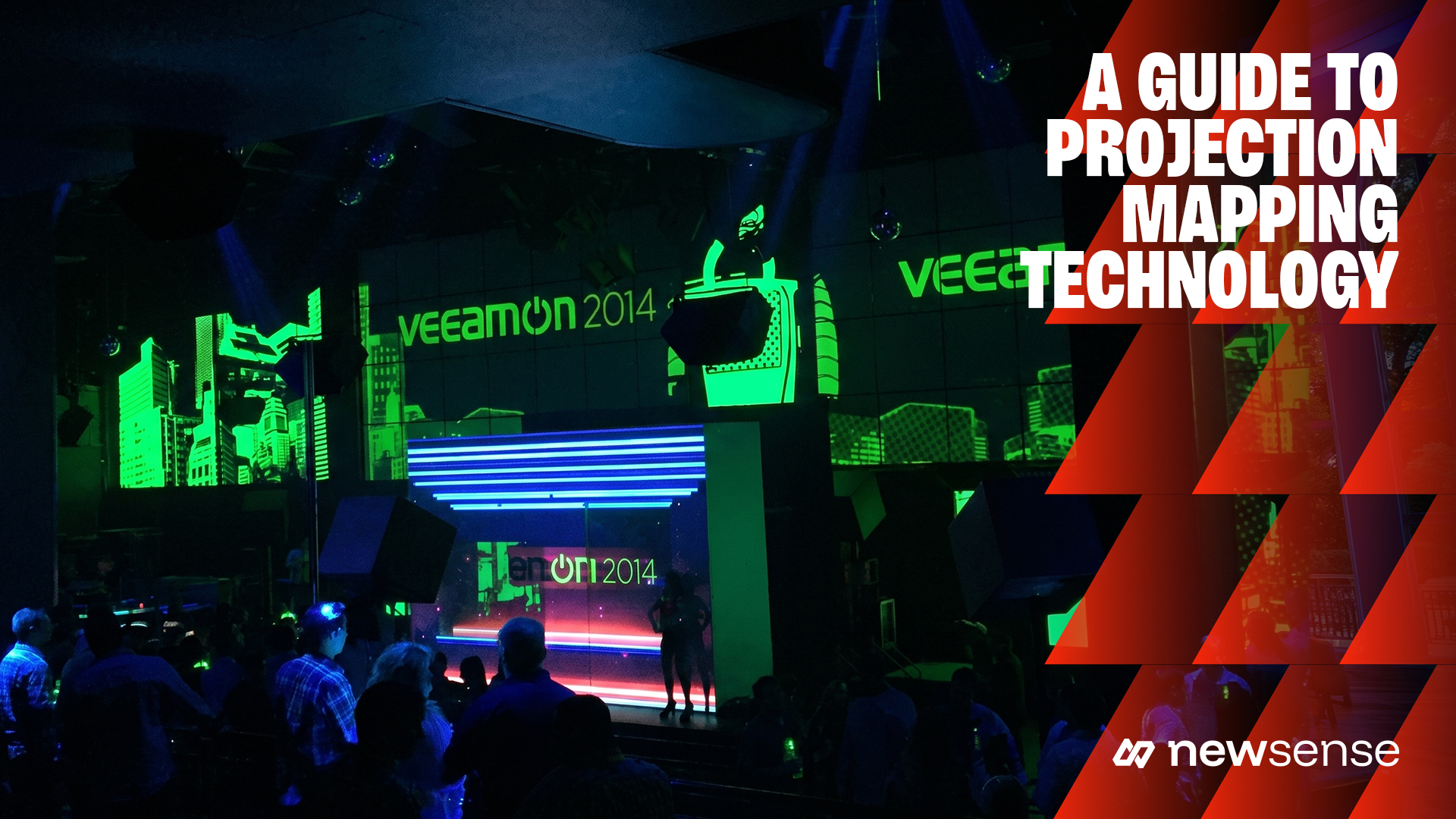
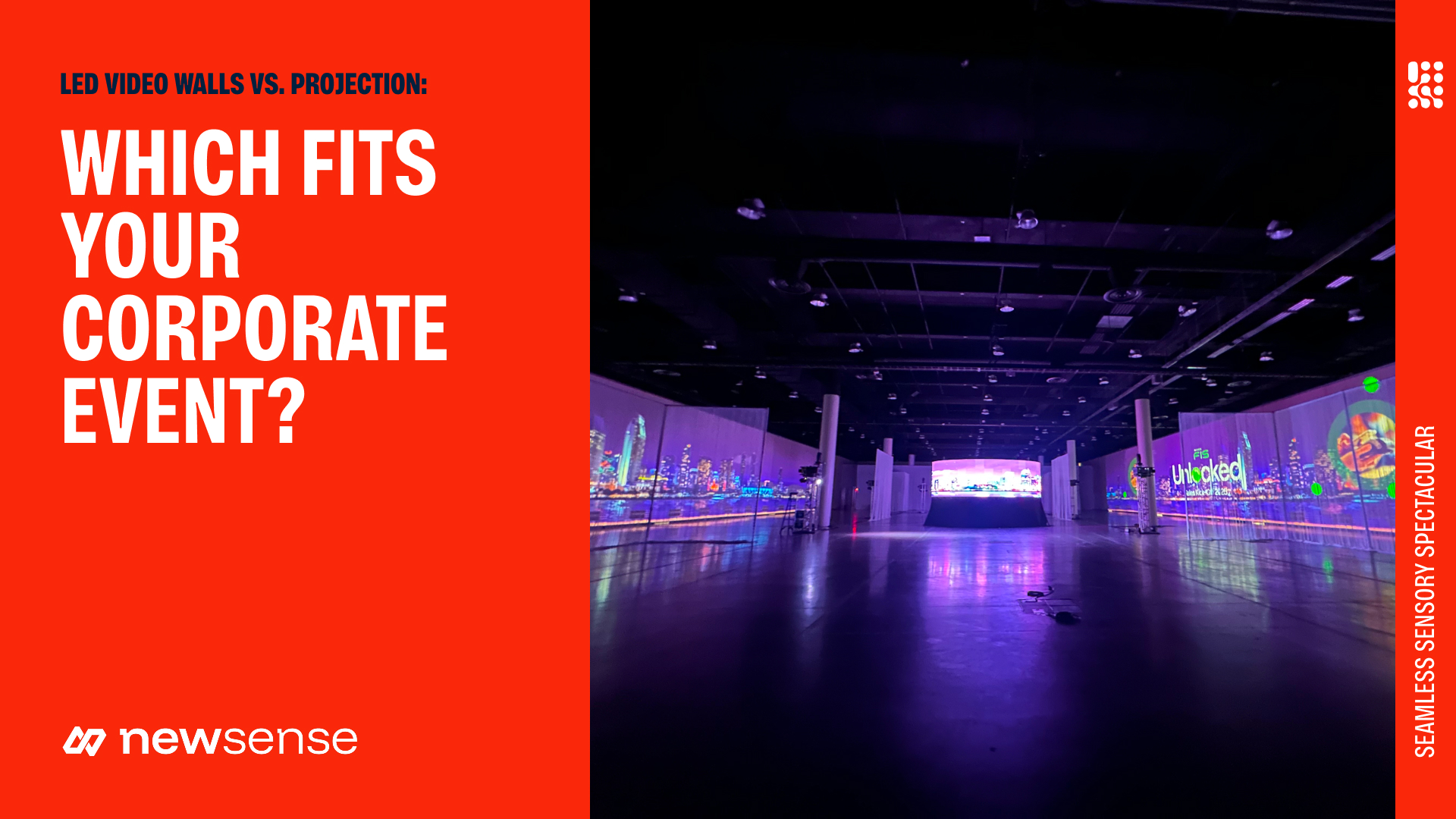
Mapping is a different application of projection. For the FIS Emerald evening at Walt Disney World Dolphin, New Sense worked alongside Hello Florida on content designed for the venue's architecture, with integrated projection and lighting. That was a mapped environment, rather than conventional screen projection. These projects illustrate different visual jobs, not a cost or performance comparison. The existing 3D Mapping guide explains the creative approach.
Compare the complete visual-production scope
Ask each provider to price the same audience experience. Two proposals are not equivalent if one includes content adaptation, rehearsal and an operator while the other covers only display equipment.
Compare display layout, content work, playback, crew, testing, show coverage and venue services. Ask what changes if the layout or schedule changes.
There is no reliable rule that LED always costs more or projection always saves money. The particular system and its delivery requirements determine the total. For a corporate budget owner, the useful question is which proposal supports the program within the approved budget, with its assumptions visible.
Questions to settle before you approve
Ask the producer to explain the recommendation using your room plan and representative slides or video. Confirm the audience sightlines, planned lighting conditions, how live camera feeds will be handled and who owns final content testing.
A mixed approach can also make sense, such as a central branded LED backdrop with separate presentation screens. It should solve a specific viewing or program need and include the extra playback and operating work.
Frequently Asked Questions
Is an LED wall always better in a bright room?
It is often worth evaluating, but suitability depends on the display's brightness, the actual light conditions and the audience. “LED” alone is not a complete specification.
Can projection look professional at a corporate event?
Yes. Appropriate projector and lens selection, a suitable surface, controlled light and tested content can make projection a sound choice.
Can we use our existing presentation with either option?
Often, but have it checked against the proposed display layout. A standard deck may need a dedicated presentation area on a wider screen rather than being stretched across it.