How to Build a Conference Opening People Film With Their Phones
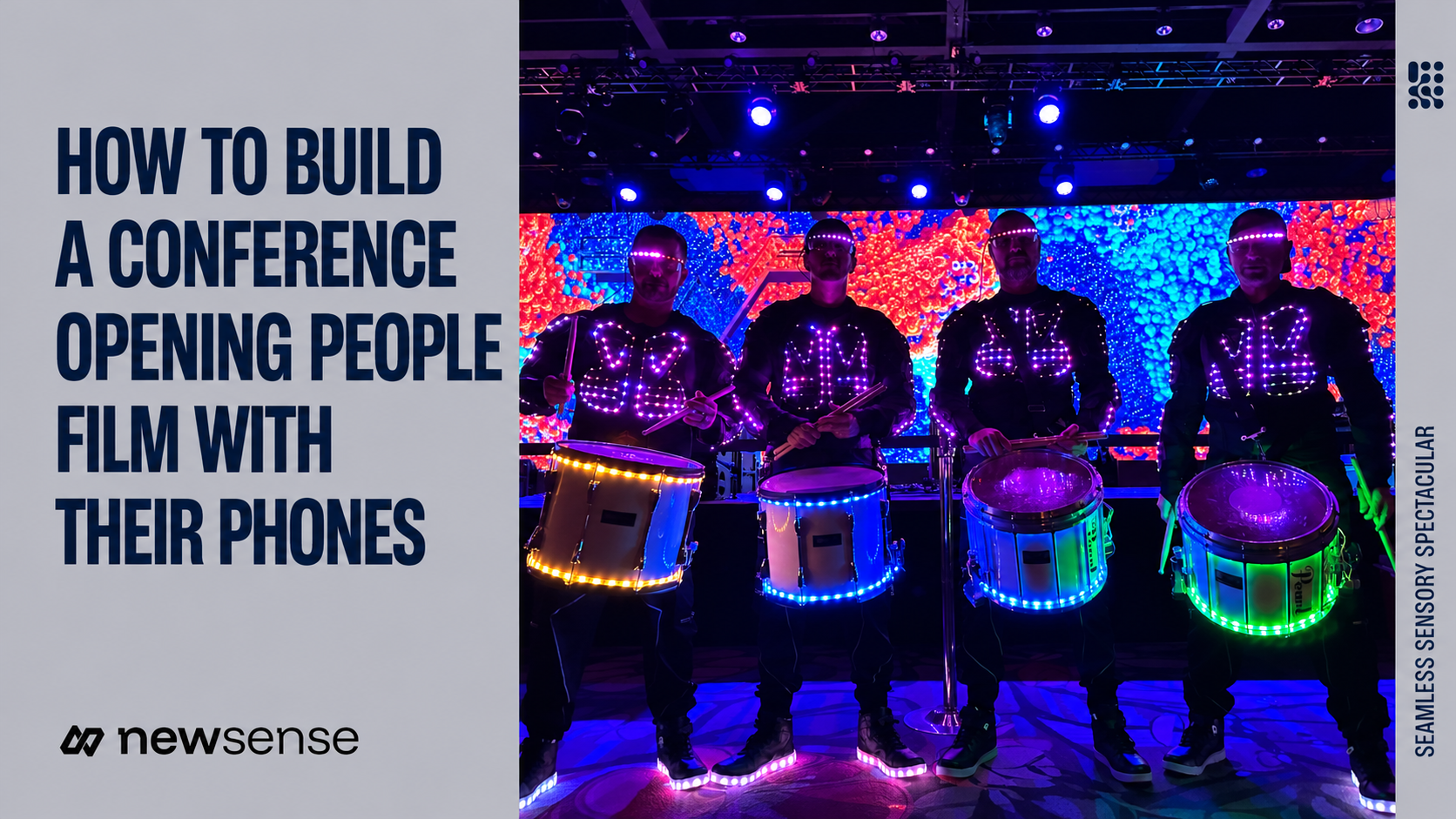
Picture the opening of your next conference from an attendee’s seat. The room settles, the lights change, and something begins onstage. A few seconds later, someone reaches for their phone.
What prompted that decision?
Perhaps a visual has changed in an unexpected way. A performance is building toward a reveal. Or the scene is striking enough that they want to show a colleague who could not attend.
You cannot script that response. You can give people a clear, compelling moment to experience.
For corporate planners and marketing teams, conference opening entertainment is an opportunity to establish the character of the event before the first presentation begins. Designing something worth capturing requires attention to the creative idea, the audience’s view, and the way the opening connects with the program.
Decide what the opening should introduce
Before choosing a performance, define what the conference is asking people to step into.
A sales kickoff might open with a sense of shared ambition. A customer conference might build anticipation around a product or idea. An employee gathering may begin by celebrating the people in the room.
That purpose gives the creative team a direction. It influences the music, visual treatment, and pace of the performance. It also helps the event owner evaluate whether a concept belongs.
Write a short brief describing the audience, the tone of the gathering, and what immediately follows the opener. Include the central message attendees should carry into the first session.
If your opening promises a bold, energetic experience, consider how the first speaker will continue it. If the program begins with a thoughtful leadership message, the performance needs an ending that allows the room to settle and listen.
Build toward a moment people can recognize
A performance gives the audience something to follow when its progression is clear.
That might involve a visual motif that develops across the opening, a musical build that resolves with a reveal, or a shift in scale that changes how the stage appears. The appropriate choice depends on the concept and the room.
Give the central moment enough space to register. Constant changes can make it difficult to know which part deserves attention. A distinct arrival, reveal, or final image gives the audience a clearer point of focus.
Imagine someone beginning a phone recording halfway through the opening. Would the next few seconds contain an understandable piece of the experience? Or would the clip depend on context that happened several minutes earlier?
This is a useful creative test. It encourages a performance with moments that hold together while remaining part of a complete sequence.
Avoid designing around a promised reaction. A brief that asks for “everyone to get their phones out” puts the emphasis on behavior the team cannot control. Describe the moment you want to create and why the audience might care about it.
Check the experience from an attendee’s seat
The strongest camera angle in a production reel may be unavailable to anyone attending the conference.
Guests experience the opening from the seats and standing areas assigned to them. Some will be near the stage. Others may be looking across tables or toward a screen from the side of the room.
Review the performance within the actual venue layout. Identify what the audience needs to see and whether those elements remain visible from different positions.
If an important part of the opening happens close to the floor, consider who can see it beyond the front rows. If the creative relies on detailed screen content, check its readability at the back. Include accessible seating areas in the review.
Ask the production team to assess how the visuals appear on a phone during rehearsal, too. Lighting and screens can look different through a camera. A short test from representative audience positions can reveal whether the central action remains clear.
The live experience should still guide the design. Recording is one possible way someone responds to it.
Give the brand a place in the creative
If an attendee shares a short clip, what connects that clip to your conference?
The answer may come from a recognizable event theme, a product reveal, or a visual treatment consistent with the company’s identity. There should be a reason for the brand to appear where it does.
Share the event’s creative direction early enough for the production team to work with it. Explain which message or visual element matters most. Providing a logo at the end of the process leaves fewer opportunities for thoughtful integration.
Consider a conference introducing a new company initiative. The opening could build toward the initiative’s name or central idea, with the first speaker explaining its significance. That gives the visual moment a role in the program.
Review how much information the audience is being asked to absorb. During a performance, a short phrase or recognizable image may be more usable than a dense statement. Supporting detail can follow when the speaker has the room’s attention.
Plan the handoff as part of the opening
The performance ends. Applause begins. The audience looks toward the stage, waiting to see what happens next.
This transition deserves a place in the creative plan.
Decide how the first speaker enters, what appears on screen, and when the lighting changes. If performers or equipment need to leave the stage, account for that movement. The speaker should know where to wait and which cue signals the entrance.
Rehearse the sequence from the final performance moment through the first spoken line. Allow for applause without leaving the presenter uncertain about when to begin.
The speaker’s opening words should also fit the transition. A brief acknowledgment can connect the performance with the conference’s purpose. That connection is easier to make when the presenter understands the creative intent in advance.
For the audience, this is one continuous beginning. The production plan should treat it that way.
Capture material your team can use
Attendee recordings offer a personal view of the experience. Your marketing team may also need footage for a recap, internal communications, or promotion of the next event.
Define those needs before the conference.
A wide shot can establish the scale of the opening. A closer view may communicate the performance more clearly on a small screen. If vertical edits are planned, the video team needs to know which action must remain in frame.
Identify the moments worth capturing and coordinate camera positions with the audience layout. Avoid placing the recording setup where it blocks the experience you are trying to document.
Agree on approvals, music usage, and delivery expectations with the relevant teams. The finished assets should have a clear owner and intended use.
This preparation gives the company usable content even when guests choose to keep their phones in their pockets.
Evaluate more than the number of phones in the air
An audience can be fully engaged while watching without recording. Phone use alone offers a limited view of how the opening landed.
After the event, review whether the performance established the intended tone and led smoothly into the first session. Ask what attendees remembered and whether they understood its connection to the conference.
For the marketing team, examine the content captured. Does it communicate something recognizable about the event? Is it suitable for the channels where the company plans to use it?
These questions help distinguish a visually interesting opening from one that serves the conference well. They also give the next creative brief a more specific starting point.
Explore FOCUS3D for your conference opening
FOCUS3D is one creative starting point for a conversation about immersive conference opening entertainment.
At New Sense, we begin that conversation with your audience, your venue, and the experience you want to introduce. From there, we can explore how the performance fits the room, the event’s identity, and the transition into your program.
Bring us your conference theme and initial agenda. Let’s discuss an opening your audience will want to watch, remember, and perhaps capture for themselves.