
Your ballroom will host a leadership presentation in the morning, a customer panel after lunch, and an awards dinner that evening. Each uses the same space, with a different expectation of the audience.
During the presentation, people need to follow the speaker and read the slides. The panel needs clear conversation across several microphones. By dinner, the room should feel ready for recognition and celebration.
Planning Orlando ballroom AV means accounting for all of those uses. The room’s layout and the content on the agenda should inform the production from the beginning.
For corporate planners and marketing teams, that starts with a practical conversation: how will people experience each part of the program, and what does the room need to support it?
Begin with the actual seating plan
The guest count alone gives a production team an incomplete picture.
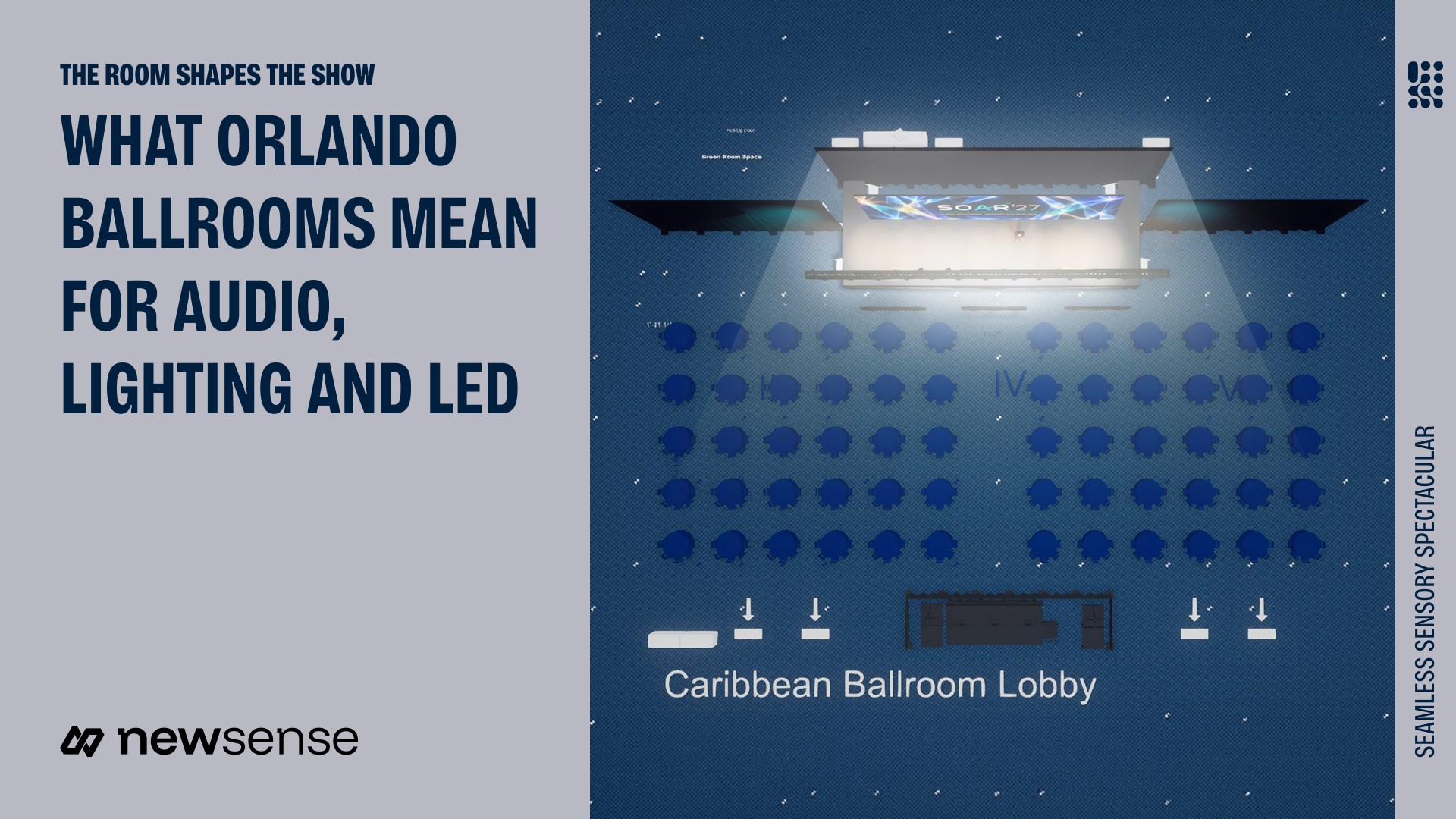
An audience seated in rows uses the room differently from guests at round tables. A wide layout creates different viewing positions from a long, narrow arrangement. The stage may be clearly visible from the center while presenting challenges for people at the edges.
Share the proposed floor plan before the AV scope is finalized. Include the stage, seating, and any areas needed for cameras or technical control.
Ask the production team to review what attendees will see from different positions. A single central screen may suit the layout. In another configuration, additional displays may help people follow essential content.
This discussion becomes more useful when you share representative slides. A room that works well for a large photograph may need a different approach for a detailed product demonstration.
Make speech easy to follow across the room
The audio plan should reflect what the audience needs to hear throughout the event.
An executive presentation, a panel, and live entertainment each require consideration. The production team needs to know how many people will speak, where they will stand, and whether they will move around.
Audience participation belongs in that conversation. If your program includes questions, decide how those questions will be heard by everyone. A microphone plan and someone responsible for managing it can keep the discussion moving.
Explain what else will happen during the sessions. Meal service, conversations near entrances, and activity in adjacent spaces are conditions the team should review.
Ask how the audio will be checked across the seating area before doors open. The goal is for attendees to follow the content comfortably, wherever they sit.
Give presenters their own lighting plan
A ballroom can look inviting while leaving a presenter poorly lit.
Discuss the people onstage separately from the overall atmosphere. A speaker at a lectern, a moderator seated with panelists, and an award recipient approaching for a photograph occupy different positions.
Those positions need to be included in the lighting plan.
If an executive prefers to move while speaking, account for that movement during preparation. For a panel, check that every participant remains visible as the conversation shifts. During recognition, establish where the recipient and presenter will pause together.
The brand palette can inform the surrounding room and scenic treatment. Lighting on people needs to support their expressions and presence.
When recording is part of the scope, review the camera image during rehearsal as well. Your team should know that the intended look works for both the live audience and the content it plans to use afterward.
Give the LED wall a defined purpose
An LED wall can establish the visual identity of the event, support presentations, or become part of a performance. Its design needs to accommodate the roles it will actually play.
Start with the content. Will the screen carry an opening film, presentation slides, live camera images, or a demonstration? Which information must remain easy to read?
Ask the production partner to show how those materials fit the proposed format. A wide scenic canvas may require dedicated layouts for presentations. Important information needs a clear place within the design.
Consider the relationship between the screen and the presenter, too. During a detailed explanation, the audience needs to know where to focus. Constant movement behind the speaker can create a competing point of attention.
Include content adaptation in the planning discussion. Confirm who will prepare the files, what formats are required, and when the team needs them for testing.
Review audio, lighting, and LED together
These decisions meet in the moments the audience experiences.
An opening film ends. The screen changes, the presenter enters, and their first words begin. The timing of each element affects how that transition feels.
Discuss those handoffs while the running order is being developed. Identify who calls the cues and how updates reach the people operating the show.
The same coordination matters when the program changes format. Moving from a keynote to a panel may involve furniture, microphones, and new lighting positions. The agenda needs enough time for that transition.
At New Sense, we approach these moments as a connected sequence. The creative direction and technical plan need to describe the same experience, with clear responsibilities for delivering it.
Plan the ballroom reset before filling the agenda
If the room changes from daytime sessions to an evening event, confirm what that change involves.
Tables may need to move. Entertainment may require stage space previously used by speakers. Screen content and lighting will need a different treatment.
Walk through the reset with the venue and production teams. Establish which equipment remains in place, what needs adjustment, and when each team can access the room.
That information helps planners build a workable schedule. It also makes the production estimate more accurate by defining the labor and time required.
If the turnaround is tight, discuss alternatives early. The team may be able to design a setup that accommodates both uses with fewer changes.
Use rehearsal to check the audience experience
Rehearsal gives the team an opportunity to work with the actual presentations and people.
Have speakers use their microphones, controls, and planned positions. Play the videos through the show system. Review detailed slides from the back and sides of the room.
Run the important transitions, including the end of the opening and the first speaker’s entrance. For panels or awards, practice the movement on and offstage.
These checks allow the team to make adjustments while there is still time. They also give presenters a chance to become comfortable with the setup.
Keep a clear process for final content changes. Everyone should know which files are approved and who is responsible for updating them.
Bring the room and program into the same brief
A useful AV conversation can begin with a floor plan, a draft agenda, and examples of your content.
Explain the audience, the purpose of the event, and the moments that deserve particular attention. Include any venue requirements or access limitations already confirmed.
From there, the production team can explain how its recommendations support the program. Your team can assess the scope in terms of visibility, participation, and the experience you want to create.
At New Sense, we connect the ballroom’s conditions with the creative and production needs of your event.
Share your Orlando ballroom layout and initial agenda. Let’s discuss how audio, lighting, and LED can work together for your audience.