.png)
Inside a High-Energy Corporate Night From Empty Ballroom to Full Show
How one integrated production team turns a standard corporate
evening into an experience executives remember — and planners
get credit for.
There's a version of a corporate night that everyone has
experienced.
The ballroom looks fine. The DJ is professional. The logo is on
the screen. The speeches run a little long. People start checking
their phones by 9pm. And by the time the last track plays, the
room empties faster than anyone wants to admit.
Nobody failed. But nobody won, either.
Then there's the other version.
The version where guests walk in and the room feels completely
different from the conference they just left. Where the energy
builds from arrival to finale without a single dead moment. Where
executives pull the planner aside at the end of the night and say,
"This is the best one we've ever done."
That version doesn't happen by accident.
This is how it gets built.
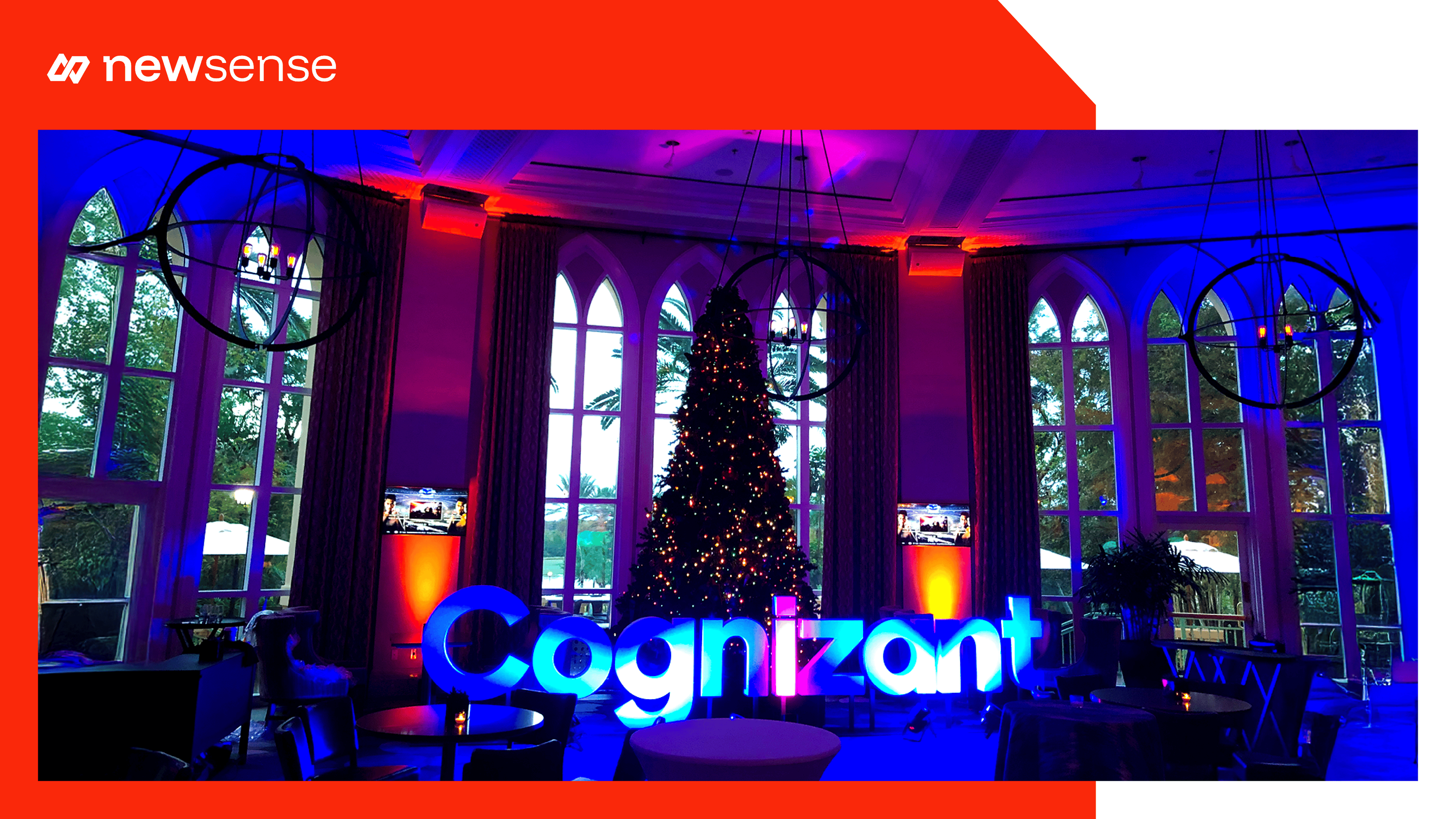
The Starting Point: A Standard Ballroom, High Stakes
The Vision: Beyond the Ballroom
Picture a large annual conference in Orlando.
It’s a flagship evening for internal leaders, top performers, and key partners.
The ballroom is capable—standard hotel AV, basic stage, projection screens, and a layout that could host a luncheon or a wedding with equal indifference.
The Challenge
The internal team and planner know this night has to feel different.
The expectations are high, the audience is discerning, and "fine" is not an acceptable outcome.
What They Want
To move the needle, the production needs to be intentional. Our clients are looking for:
- A Branded Environment: A room that feels built specifically for their brand—not just a logo dropped onto a generic backdrop.
- Seamless Flow: A run of show that holds attention from the first announcement to the final track—no dead zones, no awkward pivots.
- True Partnership: A production partner who can own the whole experience without creating more work for their team.
The Goal: A night their executives talk about in the debrief—for all the right reasons.
What They Don’t Want
We steer clear of the "safe" and the "standard." What they don't want is another "DJ plus podium plus looping logo" night that the audience has already seen seventeen times.
The New Sense Discovery: Goals Before Gear
Before a single piece of equipment is discussed, New Sense starts with three core questions:
1. What does winning look like—in one sentence?
What do people say about this night when they wake up tomorrow? That question becomes the filter for every creative and technical decision that follows.
2. What are the non-negotiables?
The moments that must land—executive remarks, recognition segments, reveals, and brand beats—and the elements that cannot be disrupted (schedule, safety, broadcast, or existing vendor relationships already in place).
3. What is the room actually capable of?
Dimensions, rigging points, power sources, existing house AV, sightlines, and load-in windows. The best show design is one that works in the real world, not just on a mood board.
The Discover Phase
From those answers, New Sense builds one definitive document: the show brief. It maps the emotional journey of the night, the key business moments, and the technical plan—all before any quote is produced. Everything that follows is designed to serve what this document says the night needs to do.
The Design: Engineering the Sensory Journey
A forgettable corporate night is built around a schedule. A seamless sensory night is built around a journey.
The difference is in the sequencing—and New Sense designs it in five deliberate phases:
1. Arrival and Reset
The moment guests walk in, the room communicates that something different is happening. Lighting shifts from the general session palette to an arrival look—warmer, more dynamic, and distinctly on-brand. Music transitions from ambient to curated. The space quietly signals: the day is over; the night has started.
2. Warm-Up and Connection
The first 30–45 minutes are designed for natural movement and conversation—not forced networking. Lighting zones draw people toward the right areas, while sound levels are calibrated so guests can talk without shouting. Subtle staging cues position the audience for what comes next.
3. Peak Moment(s)
One or two beats where everything synchronizes—lighting, audio, visuals, and entertainment firing as one.
- The Opening: A sequence that commands attention before the first executive takes the stage.
- The Recognition: An awards segment staged like a show, not a ceremony.
- The Reveal: A performance the room didn't see coming.
Note: These moments are designed in advance, rehearsed, and called live. They don’t happen by chance.
4. Sustained Energy Without Fatigue
The middle section of a corporate night is where most events lose the room. We design deliberate tempo shifts—lighting transitions, musical movement, and planned breathing spaces—that keep energy high without burning the audience out before the finale.
5. Exit With Intention
The night ends on a note that feels chosen, not accidental. A final visual look, a closing track that fits the brand, and a clean transition gives guests a sense of completion—rather than the feeling that someone just turned the music off.
The Orchestration: One Team, One Show
Gemini said
This final section addresses the "how" of your operations. I’ve used strong headers and a clean layout to emphasize the efficiency and peace of mind you provide to the event planner.
Execution: The Integrated Model
Design is only half the work. The other half is execution—and this is where the multi-vendor model consistently breaks down.
When audio, lighting, video, and entertainment have separate owners, the gaps between them become visible. Cues run a beat late, lighting doesn't match the moment, and no single person is responsible for the flow. On a New Sense show, that problem is eliminated by design.
One Show Document
Audio, video, lighting, LED, content, and entertainment are planned in a single brief. This is reviewed in one conversation, not across six email threads with six different vendors.
One Show Director
A dedicated technical director owns the sequence, calls every cue, and manages every transition live. Lighting follows audio; visuals follow entertainment. Everything takes its timing from one person, in real time.
One Rehearsal Minimum
Even for a "corporate party," New Sense runs a cue-to-cue for every critical segment before doors open. Speaker walk-ups, award reveals, and entertainment intros—the transitions that matter most get run until they are flawless.
One Point of Contact
The internal team and planner have one New Sense producer to communicate with throughout the process. Not five vendors to chase—one person who owns coordination and protects the planner from ever having to be the "production adult" in the room.
When New Sense integrates with existing AV or venue partners, the same principle applies: one show director coordinates everything, whether the full tech stack is ours or not.
From Empty Room to Doors Open: The Transformation
The Transformation
On the day of the event, the ballroom starts like any other. Standard truss. Tables set. Stage in position. The kind of room that could host anything. New Sense reshapes it:
Layout for Energy
Stage-to-audience distance is tightened. Key tables are positioned to feed momentum toward the stage. Sightlines are controlled so the room feels full and focused—not sprawling and empty.
A Lighting Story
Color, movement, and contrast are programmed to differentiate each phase of the night—arrival, opening, recognition, celebration—so each segment looks and feels distinct without requiring a set change.
Content Surfaces with Purpose
LED walls, IMAG screens, and projection are positioned and programmed to support the narrative—not compete with speakers or distract from performance.
The Result
By the time doors open, the ballroom no longer looks generic. It looks like a space that was built for this company, this brand, and this night.
Inside the Show: How the Night Runs
The Show in Motion
Once the doors open, the strategy translates into a living sequence. Here is how New Sense manages the room:
Pre-Show
Branded arrival looks on screens. Carefully curated music that matches the audience without overshadowing conversation. Lighting that hints at bigger moments coming—quietly building anticipation without announcing it.
The Opening Cue
As seats fill, the show director calls the opening sequence. Lighting tightens. Music shifts from ambient to intentional. Screens move from branded holding to show mode. The room's energy elevates before a single executive has taken the stage—and every person in the audience feels it.
Content and Recognition
Executive remarks, announcements, and awards are paced and framed as part of the show—not interruptions to it. Stings, walk-ups, and visual support are pre-programmed and called live so each moment lands with clarity and weight, without breaking the room's energy between segments.
The Turn
The pivot from formal to celebratory is handled as an intentional transition—not a hard cut. Lighting opens. Music shifts from underscore to feature. Entertainment takes over in a way that feels like a natural escalation, not a gear change.
The Finale
The room ends at its highest point. A visual send-off that matches the brand. A closing track that the audience carries out the door. A deliberate end that leaves people feeling like the night was complete—not just over.
What Changes for the Client
The New Sense Outcome
When a corporate event owner hands New Sense a high-stakes night, a few consistent outcomes show up:
Energy that holds through the formal segments
Guests stay engaged during key remarks and recognition—not just during the opening and the party. The room feels alive when it matters most, not just in the last hour.
Feedback that's specific, not generic
Leaders comment on how "tight" and "on-brand" the night felt. Attendees reference specific moments—the opening sequence, the award reveal, or the lighting change during the finale—instead of just saying "it was nice."
Visible engagement that compounds
More people are in their seats for the opening. More stay through the finale. We see "double-digit" gains in visible engagement across recognition moments, calls to action, and photo opportunities.
Demand for the next one
Next-year buy-in becomes easier to secure. The same experience gets requested for other business units, and the planner who delivered it becomes the first call for the next high-stakes night.
What This Means for Your Next Event
If you're responsible for a high-stakes corporate night—in Orlando or any major conference market—you don't need another AV quote. You need a team that thinks in shows, not line items.
With New Sense, you can:
- Hand over full ownership of the sensory experience to one accountable partner.
- Elevate existing relationships by bringing us in to lead the show and coordinate with your current AV or venue partners.
- Build a repeatable standard for what a flagship night should feel like in your organization—year after year.
The New Sense Promise: From empty ballroom to full show, the goal is always a night that your audiences feel, your leaders remember, and your brand can stand behind—every time.

