
Designing a Private Event Around One Unforgettable Moment
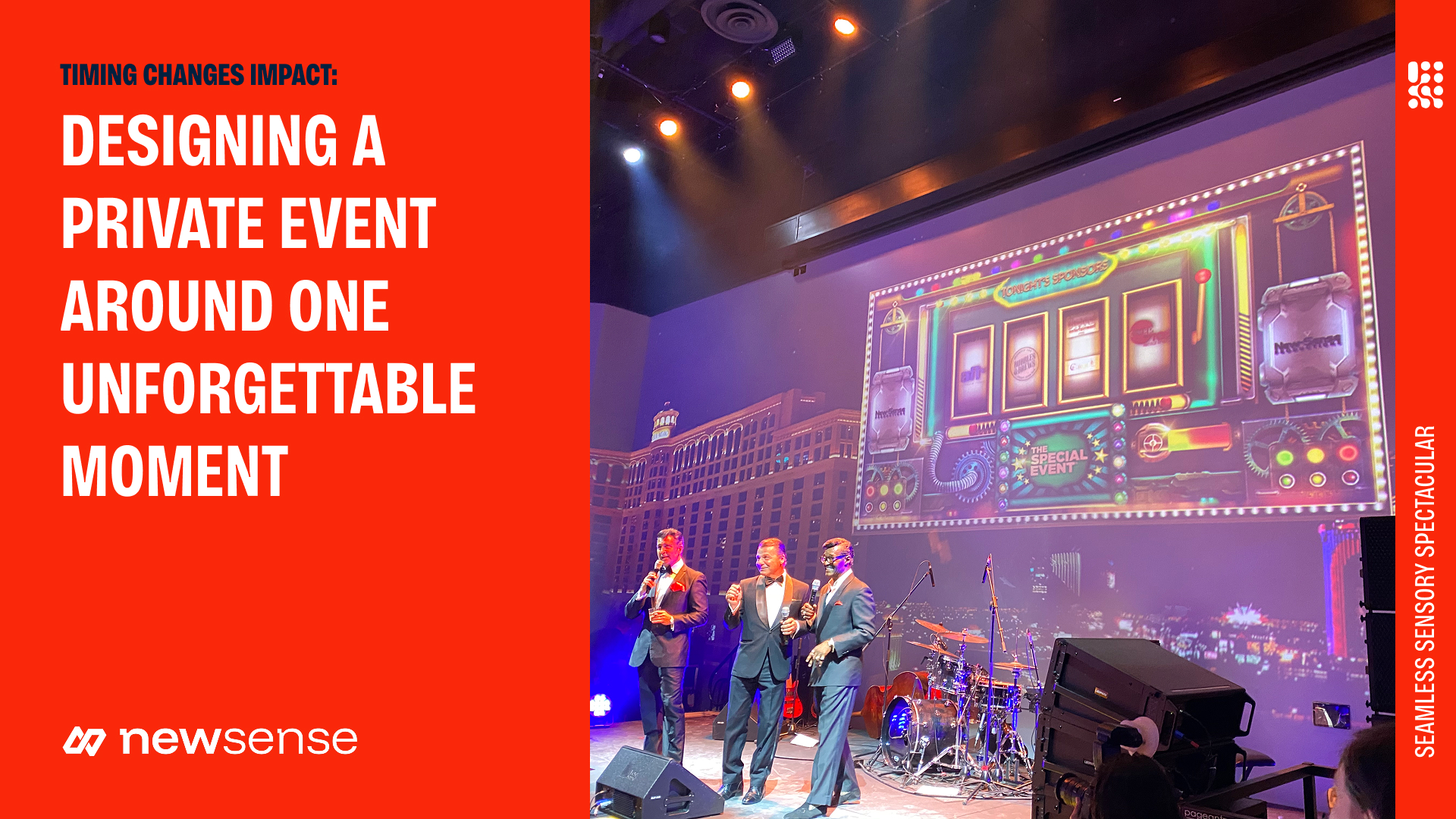
The strongest private events often have one moment that guests describe afterward.
It may be the reveal of a company milestone, an unexpected performance, a recognition sequence, or the transition from a formal dinner into a celebration. What makes it memorable is not simply its scale. The moment connects with the people in the room and gives meaning to why they were invited.
For companies hosting executive gatherings, client events, anniversaries, and VIP celebrations, that moment can carry real business value. It can reinforce relationships, recognize achievement, express the company’s identity, and give guests a shared experience associated with the organization.
The creative opportunity is to identify that moment early and design the event around it.
What should the defining moment accomplish?
Before choosing an entertainer or production technology, decide what should change in the room.
Should guests feel recognized? Surprised? Proud of what the company has accomplished? Excited about what comes next?
A corporate anniversary might use its defining moment to connect the organization’s history with its future. A client appreciation event may focus on making long-standing customers feel genuinely valued. An executive dinner might need a carefully paced reveal that introduces a new direction without turning the evening into a formal presentation.
This gives corporate decision-makers a clearer way to evaluate the creative investment. The central question becomes whether the experience supports the objective, rather than whether the event contains enough impressive elements.
Where should the moment happen?
Timing changes impact.
A major performance introduced before guests understand the purpose of the evening can feel detached. The same performance, placed after an important recognition or leadership message, can release the energy that has been building in the room.
The defining moment could happen:
- As guests enter a transformed environment.
- During an executive or VIP entrance.
- After a milestone announcement.
- Within an awards or recognition sequence.
- At the transition from dinner to celebration.
- As the closing experience of the evening.
Its position should support the natural rhythm of the event. Guests need enough context to understand why the moment matters and enough space afterward to respond to it.
How does the rest of the event build anticipation?
Designing around one memorable moment does not mean treating everything else as filler.
The arrival, room atmosphere, speeches, music, visual content, and transitions can quietly prepare guests for what is coming. A visual motif introduced at the entrance might return during the main show. Music can shift gradually as the evening progresses. Lighting can move from an intimate dinner look toward a more energetic environment.
These choices create continuity without revealing everything too soon.
This is especially valuable for private corporate events, where the experience needs to balance conversation, hospitality, brand expression, and entertainment. New Sense produces private events that feel elevated while preserving the intimacy of the occasion.
Which production elements will give the moment its impact?
The right production depends on the audience, venue, and story.
A company milestone might call for custom visual content that moves across the room before revealing a final message. A recognition event may use lighting, music, and screen content to make each honoree’s entrance feel significant. A closing celebration could bring live performers, immersive audio, and projection mapping together in one coordinated sequence.
Technology has a supporting role. Projection mapping can transform architecture. Lighting can focus attention or change the emotional temperature of the room. Audio can make a reveal feel immediate and physical. Entertainment can give the audience a reason to participate.
The effect comes from how these elements meet at the same moment.
New Sense’s fully produced shows combine live talent, visual content, lighting, audio, and show direction. Existing formats can be tailored to the audience and venue, or the team can develop a custom approach around a specific creative brief.
Why should the moment be planned early?
A memorable idea may look simple from the audience’s perspective. Behind it are decisions involving venue access, power, rigging, sightlines, content dimensions, performer requirements, rehearsals, and show cues.
Early collaboration allows the creative concept to develop alongside those realities. It also helps planners and production teams understand what the venue can support before the experience is promised internally.
New Sense can work directly with the organization or alongside its event manager, planner, DMC, agency, hotel, and venue partners. Bringing those groups together early protects both the idea and its execution.
How do you keep a big moment from feeling overproduced?
Restraint gives the main moment room to matter.
If every transition uses dramatic lighting and every segment competes for attention, the audience has no reason to recognize the emotional high point. A quieter arrival or dinner experience can make a later reveal feel more significant.
The moment should also fit the company’s personality. A bold consumer brand may want a high-energy performance. A leadership organization may prefer a cinematic story, an elegant visual transformation, or a highly personal recognition sequence.
Memorable does not have one visual style. It comes from understanding the audience well enough to choose the right one.
A private event becomes immersive when guests feel surrounded by a coherent experience. When that experience builds toward a moment with purpose, they leave remembering more than the production. They remember what the company wanted the evening to mean.
Planning an executive event, corporate anniversary, client celebration, or VIP experience? Talk to a New Sense show producer about designing the moment your guests will carry with them.
Frequently Asked Questions
What is an immersive private event experience?
An immersive private event experience uses the environment, visual content, sound, lighting, entertainment, and show flow to involve guests in a connected creative concept.
Does an immersive event require projection mapping?
No. Projection mapping is one option. The right approach may use lighting, live entertainment, audio, scenic design, screen content, or a carefully produced reveal.
Can New Sense collaborate with an existing planner or DMC?
Yes. New Sense can work alongside planners, DMCs, agencies, hotels, and venue teams or manage the complete creative and technical production.
How early should a custom show moment be planned?
Planning should begin as early as possible when the concept involves custom content, performers, projection, complex staging, or venue-specific technical requirements.